Journal
Choosing Between Vinyasa and Yin Teacher Courses
How to match a training style with the classes you actually want to teach
Published on 14 March 2025 · 7 min read
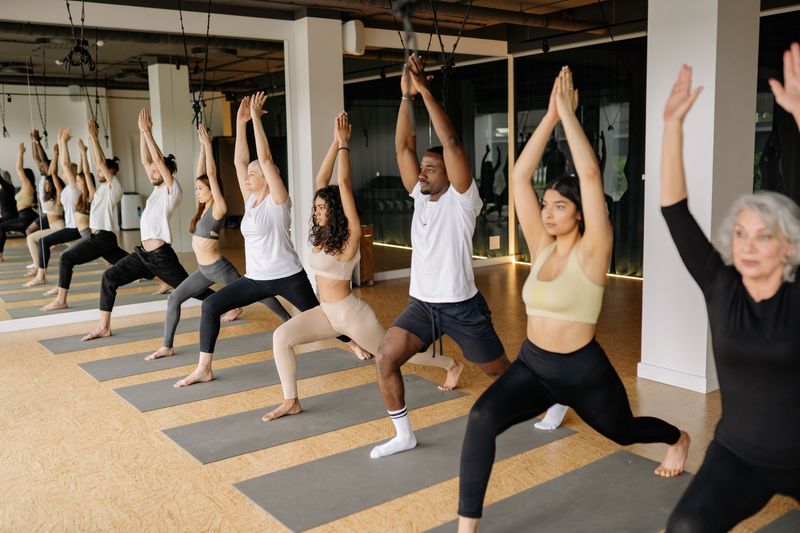
Most teachers arrive at this fork after a few years of practising both formats, and the decision rarely comes down to which one feels nicer on a given Tuesday. Vinyasa and yin trainings build different muscles, and the daily rhythm of each course tells you more about the work than the brochure does.
A vinyasa training usually spends its mornings on the mat, moving through led classes and then breaking down the sequences you just practised. Expect long blocks on transitions, cueing, and how to build a class that peaks somewhere useful rather than somewhere exhausting. Anatomy shows up in service of movement: where the shoulders go in chaturanga, how to teach a jump-through without wrecking wrists. By the second week you are already teaching short segments to peers and getting notes on pacing.
Yin courses run slower and quieter. The practice itself is long holds, so the training day often includes two or three sustained sessions with bolsters, blankets and blocks. Modules lean toward prop work, skeletal variation, and the less obvious skill of holding a room without filling every silence. Trainees describe the hardest part as learning to stay present while someone else is uncomfortable, which is not something a sequencing manual teaches.
The students each style attracts differ too. Vinyasa classes pull people who want to sweat, travel well and follow a beat. Yin rooms tend to gather practitioners recovering from sport, desk work or grief, and they notice immediately whether a teacher is rushing. If you have watched a studio's schedule for a season, you already know which of those rooms fills up on a Wednesday night.
One practical signal sits in the directory itself. When studio owners post a teaching slot, they usually name the format, the time of day and the level. A shala hiring for a 6am yin class is telling you something about who shows up before work. A studio looking for someone to run a Saturday morning flow is telling you something else. Reading those listings for a month gives a clearer picture of local demand than any comparison chart.
Teachers who want to run both formats often sequence a mixed week rather than a mixed class. Yin on Monday and Thursday, vinyasa on Tuesday and Saturday, with breathwork filling the gaps. The two styles keep each other honest: the slow work teaches you to wait, and the fast work teaches you to land a cue before the room drifts.
Related reading
Two more pieces from the journal that pair well with this one.